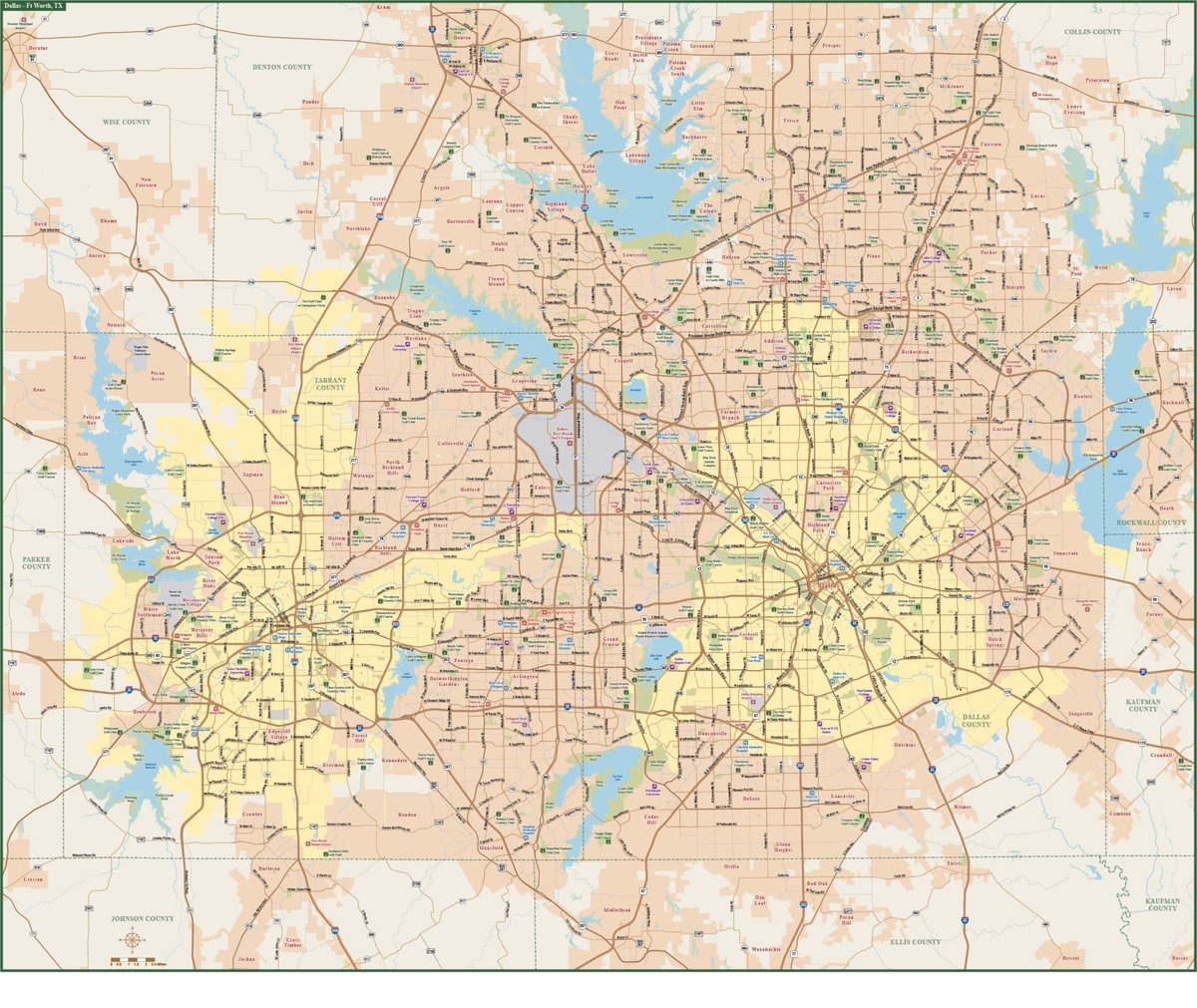
Ever tried scheduling a virtual meeting across continents or planning a flight that traverses multiple time zones, only to find yourself scratching your head? Navigating the global clock can feel like a labyrinth, and understanding the rhythm of a major hub like Dallas-Fort Worth is your compass. This guide cuts through the complexity, offering a definitive look at Comparing Dallas Fort Worth Time with Other Major Cities so you can connect, travel, and conduct business with confidence and precision.
Dallas-Fort Worth, Texas, home to the massive DFW International Airport and a booming metroplex, operates on Central Time. But what exactly does that mean when you're coordinating with someone in London, Tokyo, or even just Los Angeles? We'll break down the nuances, from Daylight Saving Time shifts to the subtle differences that impact everything from flight schedules to international conference calls.
At a Glance: Understanding DFW Time
- DFW's Primary Time Zone: Central Time (CT).
- Standard Time (CST): UTC -6 hours.
- Daylight Saving Time (CDT): UTC -5 hours.
- IANA Identifier: America/Chicago.
- Current Local Time Status: Approximately 35 minutes ahead of apparent solar time, with solar noon at 12:35 PM.
- Key DST Changes: DFW switches to CST on Sunday, November 2, 2025, and to CDT on Sunday, March 8, 2026.
- Day Length: Roughly 10 hours and 10 minutes (based on a sunrise of 07:30 AM and sunset of 05:41 PM).
Decoding Dallas-Fort Worth's Time Zone: Central Standard (CST) and Central Daylight (CDT)
At its heart, Dallas-Fort Worth anchors the Central Time (CT) zone in the United States. This means its standard time is Central Standard Time (CST), which consistently runs 6 hours behind Coordinated Universal Time (UTC) – often expressed as UTC -6. During the warmer months, like much of the U.S., DFW switches to Central Daylight Time (CDT), adjusting its clocks forward one hour. This puts it at UTC -5, effectively giving residents and businesses an "extra" hour of daylight in the evenings.
The official IANA identifier for DFW's time zone is America/Chicago, reflecting its shared time zone with Chicago, a major hub also observing Central Time. While the precise timing of sunrise and sunset can vary slightly throughout the year, Dallas/Fort Worth International Airport typically sees a day length of around 10 hours and 10 minutes, with the sun rising around 07:30 AM and setting at 05:41 PM on a typical winter day. Interestingly, the current local time in DFW runs about 35 minutes ahead of apparent solar time, where solar noon aligns with 12:35 PM on the clock. This subtle offset accounts for the standardized time zone boundaries not always perfectly aligning with astronomical events at every specific location.
The Upcoming Dance of Daylight Saving Time
Understanding the exact dates for Daylight Saving Time (DST) shifts is crucial for avoiding miscommunications or missed connections. Here's what's on the horizon for Dallas-Fort Worth:
- Winter Time Transition (Fall Back): On Sunday, November 2, 2025, DFW will switch from Central Daylight Time (CDT) back to Central Standard Time (CST). At 02:00 AM local time, clocks will be set back one hour to 01:00 AM. This means moving from UTC -5 to UTC -6.
- Summer Time Transition (Spring Forward): Looking ahead to Sunday, March 8, 2026, DFW will switch from Central Standard Time (CST) to Central Daylight Time (CDT). At 02:00 AM local time, clocks will spring forward one hour to 03:00 AM. From this date onward, the time zone will be UTC -5.
These biannual shifts are pivotal when you're comparing DFW time with cities that either don't observe DST or have their own unique DST schedules. Always double-check the current date when making time comparisons! For a real-time update on DFW's clock, you can always check the Dallas Fort Worth current time.
Why Understanding DFW's Time Matters: Business, Travel, and Connection
Dallas-Fort Worth isn't just a dot on the map; it's a dynamic global gateway. As a major center for finance, telecommunications, technology, and aviation, DFW plays a crucial role in national and international commerce. Its sheer size – the DFW Metroplex is one of the largest in the U.S. – means a constant flow of business, tourism, and family connections.
From coordinating a crucial video conference with a team in London to ensuring you pick up arriving relatives at DFW Airport, a precise grasp of time differences is non-negotiable. Missing a deadline, showing up late for a virtual interview, or even misjudging travel times can have real consequences. This guide aims to equip you with the knowledge to avoid such pitfalls and navigate global time with ease.
The Continental Divide: Comparing DFW Time with Major North American Cities
When looking at time zones within North America, DFW serves as a central reference point. Its position means it's typically behind cities to its east and ahead of cities to its west. Here's a clear breakdown:
| City (U.S./Canada) | Time Difference from DFW | Example (If DFW is 12:00 PM CST/CDT) | Notes |
|---|---|---|---|
| Los Angeles | -2 hours | 10:00 AM PDT/PST | Located in the Pacific Time Zone. DFW is two hours ahead. |
| Chicago | 0 hours | 12:00 PM CST/CDT | Shares the same Central Time Zone as DFW. No time difference. |
| New York | +1 hour | 01:00 PM EDT/EST | Located in the Eastern Time Zone. DFW is one hour behind. |
| Toronto | +1 hour | 01:00 PM EDT/EST | Toronto, Canada, also observes Eastern Time, aligning with New York. DFW is one hour behind. |
| Practical Tip: For domestic travel or business, the biggest challenge often comes during the DST transition periods. Always confirm whether the other city is currently observing Standard or Daylight Saving Time, especially around March and November. |
Across the Atlantic and Beyond: DFW Time vs. European, African, and Middle Eastern Hubs
As you venture further afield from Texas, the time differences become more substantial. The key reference here is UTC (Coordinated Universal Time), which DFW is either 5 or 6 hours behind.
| City | Time Difference from DFW | Example (If DFW is 12:00 PM CST/CDT) | Notes |
|---|---|---|---|
| London (UK) | +6 hours | 06:00 PM GMT/BST | London operates on Greenwich Mean Time (GMT) or British Summer Time (BST). UTC is equivalent to GMT during standard time. DFW is 6 hours behind London. |
| UTC | +6 hours | 06:00 PM UTC | While not a city, UTC is a critical reference. DFW is 6 hours behind UTC when on CST, and 5 hours behind UTC when on CDT. The +6 hours listed means if it's 12 PM in DFW, it's 6 PM UTC (during CST). If it's 12 PM in DFW during CDT, it's 5 PM UTC. Be mindful of DST! |
| Lagos (Nigeria) | +7 hours | 07:00 PM WAT | Lagos observes West Africa Time (WAT). DFW is 7 hours behind Lagos. |
| Paris (France) | +7 hours | 07:00 PM CET/CEST | Paris observes Central European Time (CET) or Central European Summer Time (CEST). DFW is 7 hours behind Paris. |
| Zurich (Switzerland) | +7 hours | 07:00 PM CET/CEST | Like Paris, Zurich observes CET/CEST. DFW is 7 hours behind Zurich. |
| Cairo (Egypt) | +8 hours | 08:00 PM EET/EEST | Cairo observes Eastern European Time (EET) or Eastern European Summer Time (EEST). DFW is 8 hours behind Cairo. |
| Johannesburg (South Africa) | +8 hours | 08:00 PM SAST | Johannesburg observes South African Standard Time (SAST). DFW is 8 hours behind Johannesburg. |
| Istanbul (Turkey) | +9 hours | 09:00 PM TRT | Istanbul observes Turkey Time (TRT). DFW is 9 hours behind Istanbul. |
| Moscow (Russia) | +9 hours | 09:00 PM MSK | Moscow observes Moscow Time (MSK). DFW is 9 hours behind Moscow. |
| Dubai (UAE) | +10 hours | 10:00 PM GST | Dubai observes Gulf Standard Time (GST). DFW is 10 hours behind Dubai. |
| Key Consideration: Many European countries also observe Daylight Saving Time, but their start and end dates often differ from those in North America. This can create periods where the time difference briefly changes by an hour. Always verify the current time in both locations to avoid errors. |
Crossing the Pacific: DFW Time with Asian and Oceanic Giants
As you move further east across the globe, the time differences grow significantly, leading to substantial day shifts. Coordinating with cities in Asia and Oceania often involves dealing with the "next day" phenomenon.
| City | Time Difference from DFW | Example (If DFW is 12:00 PM CST/CDT) | Notes |
|---|---|---|---|
| Mumbai (India) | +11.5 hours | 11:30 PM IST | Mumbai observes Indian Standard Time (IST). India does not observe Daylight Saving Time. The half-hour difference is notable. DFW is 11.5 hours behind Mumbai. |
| Hong Kong | +14 hours | 02:00 AM HKT (Next Day) | Hong Kong observes Hong Kong Time (HKT) and does not observe Daylight Saving Time. DFW is 14 hours behind Hong Kong, meaning it's often the next day there. |
| Shanghai (China) | +14 hours | 02:00 AM CST (Next Day) | Shanghai observes China Standard Time (CST) and does not observe Daylight Saving Time. Like Hong Kong, DFW is 14 hours behind, placing it on the next calendar day. |
| Singapore | +14 hours | 02:00 AM SGT (Next Day) | Singapore observes Singapore Time (SGT) and does not observe Daylight Saving Time. DFW is 14 hours behind Singapore, so plan for the next day. |
| Tokyo (Japan) | +15 hours | 03:00 AM JST (Next Day) | Tokyo observes Japan Standard Time (JST) and does not observe Daylight Saving Time. DFW is a full 15 hours behind Tokyo, often requiring a day shift in your planning. |
| Sydney (Australia) | +17 hours | 05:00 AM AEST/AEDT (Next Day) | Sydney observes Australian Eastern Standard Time (AEST) or Australian Eastern Daylight Time (AEDT). Australia's DST schedule is inverse to North America's. DFW is 17 hours behind Sydney, meaning if it's noon in DFW, it's 5 AM the next day in Sydney (during AEST). This difference will shift during DST periods, so always confirm current times. |
| Important Note: The concept of "next day" becomes crucial here. If it's Monday noon in DFW, it could easily be Tuesday morning in Tokyo or Sydney. Always consider the calendar date when scheduling across these vast time differences. |
DFW's Unique Pulse: Beyond the Clock (Dallas vs. Fort Worth)
While Dallas and Fort Worth share the same time zone and are served by the sprawling Dallas/Fort Worth International Airport (DFW), they are distinct cities with unique characters. Understanding these differences can provide valuable context if you're traveling to or doing business in the Metroplex.
Dallas: Situated in the northeastern part of Texas, Dallas is known for its modern, urban landscape and cosmopolitan atmosphere. It's a powerhouse in finance, telecommunications, technology, and healthcare, hosting numerous Fortune 500 companies. Culturally, Dallas boasts a thriving arts district, home to the Dallas Museum of Art and the Morton H. Meyerson Symphony Center, alongside a diverse culinary scene with upscale international flavors. It's also a major sports city, proud home to the Dallas Cowboys (NFL), Dallas Mavericks (NBA), and Dallas Stars (NHL). The cost of living is generally higher here, reflecting its urban environment and corporate presence.
Fort Worth: Located west of Dallas, Fort Worth offers a distinctive Western charm, characterized by its cowboy heritage and historic allure. Its economy focuses on aviation, defense, manufacturing, and logistics, with major aerospace companies. Fort Worth embraces its traditions with the historic stockyards and rodeos, while also offering significant cultural attractions like the Kimbell Art Museum and Bass Performance Hall. When it comes to dining, authentic Texan cuisine, including steakhouses and barbecue, takes center stage. Outdoor enthusiasts can enjoy the Fort Worth Botanic Garden and the Trinity Trails. Generally, Fort Worth offers a more affordable cost of living compared to Dallas.
Despite their differences in culture and economic focus, both cities are inextricably linked by geography, the Trinity River, and their shared reliance on DFW International Airport. Crucially, they both adhere to the same Central Time Zone, simplifying local scheduling within the Metroplex.
Practical Strategies for Seamless Time Zone Management
Navigating global time differences can feel like a puzzle, but with the right approach, you can manage it effortlessly. Here’s how to stay on track:
- Use a World Clock App: Ditch manual calculations. Your smartphone, computer, or smartwatch likely has a built-or feature for a world clock. Add Dallas-Fort Worth and any other cities you frequently interact with. This automatically accounts for DST changes.
- Confirm DST Dates: Don't assume. Always verify if the other city observes Daylight Saving Time and, if so, their specific start and end dates. As we saw, European DST schedules often differ from North American ones, and many Asian and African cities don't observe it at all.
- Think in UTC: For complex international scheduling, temporarily converting all times to UTC (Coordinated Universal Time) can be helpful. This provides a single, universal reference point before you convert back to local times. Remember DFW is UTC -6 (CST) or UTC -5 (CDT).
- Schedule with Overlap: When coordinating meetings across many time zones, aim for a common "sweet spot." For example, if DFW is 12 PM, London is 6 PM, and Tokyo is 3 AM (the next day), a meeting at 9 AM DFW (3 PM London, 12 AM Tokyo) might minimize disruption for some, though it's still challenging.
- Set Calendar Reminders: Always create calendar entries with the time zone clearly specified. Most digital calendars allow you to select the time zone for an event, automatically adjusting it for your current location.
- "Confirm Time In Your Local Zone": When communicating about a meeting or event, explicitly state the time and then add a phrase like "Please confirm this time in your local time zone." This places the responsibility on the recipient to double-check.
- Account for Travel Fatigue (Jet Lag): When physically traveling to or from DFW, factor in the effects of jet lag. Time differences don't just affect schedules; they affect your body's internal clock. Give yourself time to adjust.
By adopting these strategies, you can reduce the chances of misunderstandings and ensure your time-sensitive interactions with Dallas-Fort Worth, and the world, are always precise.
Common Questions About DFW Time
Even with all the information, a few questions consistently pop up. Here are concise answers to some frequently asked questions about Dallas-Fort Worth time.
What time zone is Dallas-Fort Worth in?
Dallas-Fort Worth is in the Central Time Zone (CT). This means it observes Central Standard Time (CST), which is UTC -6 hours, during the fall and winter, and Central Daylight Time (CDT), which is UTC -5 hours, during the spring and summer.
Does Dallas-Fort Worth observe Daylight Saving Time?
Yes, Dallas-Fort Worth observes Daylight Saving Time (DST). Clocks "spring forward" one hour in the early spring (typically March) and "fall back" one hour in the early fall (typically November). For instance, DFW will switch to CST on November 2, 2025, and to CDT on March 8, 2026.
How far ahead or behind is DFW from UTC?
DFW is 6 hours behind Coordinated Universal Time (UTC) when observing Central Standard Time (CST), making it UTC -6. When observing Central Daylight Time (CDT), it is 5 hours behind UTC, or UTC -5.
Are Dallas and Fort Worth in different time zones?
No, Dallas and Fort Worth are in the same time zone, both observing Central Time (CT). Despite being distinct cities with different characteristics, they share a unified time across the DFW Metroplex.
How do I quickly calculate time differences with DFW?
The easiest way is to use a reliable world clock app on your smartphone or computer. If you're doing a quick mental calculation, remember:
- East of DFW (like New York) is usually +1 hour.
- West of DFW (like Los Angeles) is usually -2 hours.
- For international cities, determine their UTC offset and compare it to DFW's current UTC offset (either -5 or -6).
Your Essential DFW Time Toolkit
Understanding Dallas-Fort Worth time is more than just knowing an offset; it's about connecting seamlessly with a vibrant economic and cultural hub. Whether you're a frequent flyer, a remote professional, or simply trying to call family, mastering the nuances of DFW's Central Time—and its Daylight Saving shifts—is an invaluable skill.
We've explored how DFW stands in relation to major cities around the globe, from the one-hour shifts with New York to the full-day leaps across the Pacific. You now have the knowledge of DFW's UTC offsets, the specific dates for its upcoming Daylight Saving transitions, and practical strategies to manage your schedule with precision.
Armed with this comprehensive guide, you're ready to tackle any time zone challenge. Keep these insights handy, utilize your digital tools, and communicate clearly. The world, connected through time, awaits your confident stride.